What to Do in a Plumbing Emergency at Your Oregon City Home
Start with the first sixty secondsKnowing what to do in a plumbing emergency comes down to a few steps in the right order, starting with the water itself.
What to do in a plumbing emergency in the first minute
In almost every plumbing emergency, the same three moves come first. Do them before anything else.
- Stop the waterShut the main, or just the little valve beneath the fixture when the leak is obviously there. The shutoff guide helps you find the main.
- Stay clear of electricityWater close to sockets, cords or a light means stay back. Flip that breaker only if the panel can be reached from dry ground.
- Get people and pets out of the wet areaWet floors are slippery and hot water from a heater can scald.
Once those are done, you have time to think, take photos and call. Most of the damage in a plumbing emergency happens in the minutes before the water is stopped.
Which valve to close
Every home has several shutoff valves. Closing the one closest to the problem keeps water on in the rest of the house.
- Under a sink or toilet
- Small oval handles on the supply lines. Close these when the leak is clearly at that fixture.
- On top of the water heater
- The cold supply valve stops the tank refilling if the leak is at the heater.
- The main house shutoff
- Usually in the garage, utility room, crawl space or where the line enters the house. It stops all water inside.
- At the meter
- Near the street, inside a box in the ground. Use it when the house valve is stuck or cannot be found.
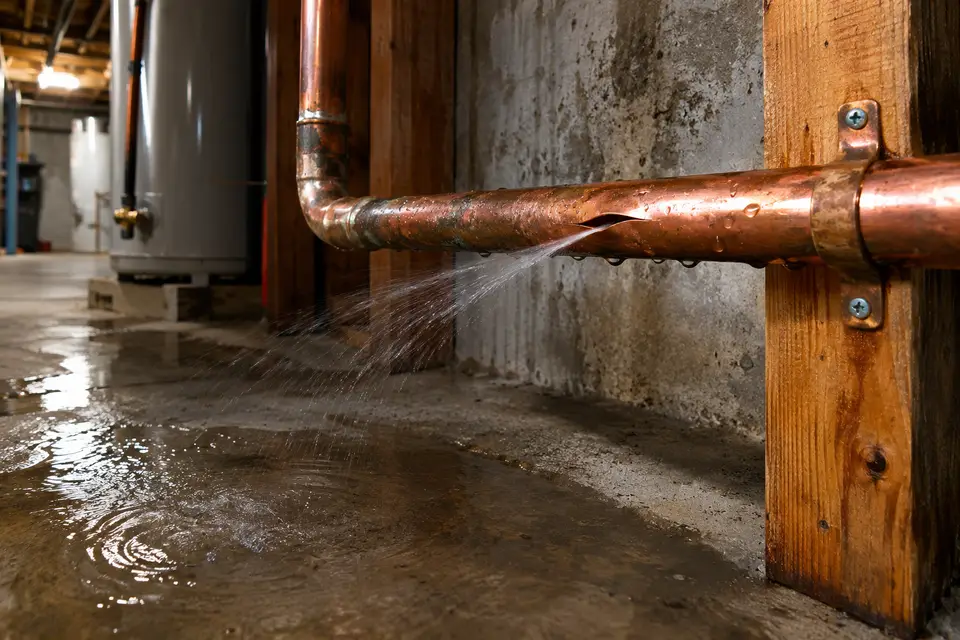
If a pipe has burst or a ceiling is dripping
Close the main valve, then open a tap at the lowest point of the house, such as a laundry sink or an outside faucet, to drain the water still in the pipes.
- Put buckets under drips and towels along the edges of puddles.
- If a ceiling bulges with water, keep people out from under it.
- Move rugs, electronics and boxes out of the wet area.
- Take photos before you clean up.
What happens after the plumber arrives is set out on the burst pipe repair page.
If a toilet is overflowing
Twist the little supply valve behind the toilet shut at once. Should it refuse to turn, pop the tank lid and hold the flapper down so no more water reaches the bowl.
Do not flush again until the water level has dropped. A flange plunger clears most simple clogs. If the toilet overflows again, or other drains gurgle when it is flushed, stop and call. The toilet repair page explains the common causes.
If the water heater is leaking
- Close the cold supply valve on top of the tankThis stops the tank from refilling as it leaks.
- Turn off the heatMove a gas tank to its pilot position, or cut power to an electric tank at the breaker.
- Keep clear of hot waterWater near the tank can be very hot. Move things away and let it cool.
A dripping fitting is often an easy mend, whereas water coming from the tank shell normally means the tank is done. Both cases appear on the water heater repair page.
If a drain is backing up
Pause every tap and appliance, washer and dishwasher included. A single blocked drain usually means a clog near that fixture, where a plunger may do the trick.
Several drains filling at once? Use no water and phone. Drain cleaning handles the indoor drains, while the main sewer line under the yard is a different job, and the plumber can usually tell which one you face from your description.
If you smell gas
Head outdoors at once. Leave light switches alone, avoid anything that might spark and call the gas utility once you are outside.
Plumbing comes second. Once the gas utility has made the area safe, a plumber can look at the water heater or the gas appliance connection.
What to tell us when you call
A few clear details help the plumber come prepared.
- What happened
- For example, a pipe split in the garage, or the toilet overflowed and will not stop.
- What you did
- Which valve you closed, whether the power is off and whether the water heater is off.
- Where it is
- The room and the fixture, plus whether a ceiling or floor below is wet.
- How to reach you
- The street, any gate or parking notes and the best way into the house.
Keep your phone nearby after the call so the plumber can reach you on the way.
If water drips from a ceiling light
Water and electricity together need extra care. Do not touch the fixture or the switch, and keep everyone out of the room.
- Close the main water valveStopping the water is still the first step, as long as the valve is not in the wet area.
- Switch off that circuit at the panelOnly from a dry spot. When you cannot tell which breaker feeds that light, use the main one.
- Leave the fixture aloneEven after the power is off, let an electrician check the fixture before it is used again.
The plumber repairs the leak above the ceiling. Once that is done, have the light fixture checked before switching that circuit back on.
If no water comes out of any tap
Losing water everywhere at once is alarming, but the cause is usually one of a few things.
- After a hard freeze
- Ice in the pipe where the supply enters can cut water to the whole house. Keep faucets shut, warm the spot gently, and never use a flame. Spot a split? Close the main before the thaw.
- A closed valve
- Check that nobody closed the main valve or the meter valve for another job.
- Work in the street
- The water utility sometimes shuts off water for repairs. A neighbor without water too points to the utility.
- A broken water line
- Water lost along with a wet patch in the yard points to the buried line. See water line repair.
Keeping damage down until help arrives
With the water stopped and everyone safe, a few small jobs limit how far the damage spreads.
- Mop or towel up standing water so it does not soak into flooring.
- Throw open nearby cupboards and closets so damp surfaces can breathe.
- Lift furniture legs onto foil or wood blocks to keep them out of wet carpet.
- Move books, papers and electronics to a dry room.
- Keep the heat on and run fans if you have them, since drying is slow in damp weather.
Leave the broken pipe or fixture as it is for the plumber to see. Moving or cutting it can make the repair harder.
Plumbing emergency questions
Staying safe
Is it safe to walk through water on the floor?
Only when nothing electrical sits in or beside the water. In doubt, keep out, and cut power at the panel only if you can get there without wet feet.
With the main closed, what about the water heater?
Turn it down if the water will be off for any length of time. Gas tanks go to pilot or vacation, electric tanks to off at the breaker.
Limiting damage
How do I drain the pipes after closing the main?
Open a tap at the lowest point of the house, such as a laundry sink or outside faucet. Water stops running once the pipes are empty.
Should I start drying the room before the plumber arrives?
Yes. Mop up standing water, open cabinets and move belongings, but leave the broken pipe and the area around it for the plumber to see.
Will my insurance want photos?
Most insurers ask for photos of the damage and the cause. Take them before cleanup and keep the broken part if one is removed.
After the emergency
When does the water go back on?
Once the repair is done and has been tested. The plumber will turn it on slowly with you while watching the repair.
How do I avoid the next emergency?
Know where your valves are and test them once a year, replace old washer hoses and protect exposed pipes before a forecast freeze.
What if I cannot find the main shutoff valve?
Fall back on the meter valve near the street, provided it is safe to reach. Mention on the call that the house valve stayed hidden, and the plumber will find it and check it works.
Can I use buckets and towels instead of shutting the water off?
Only for a slow drip you can catch. If water is spraying or spreading, buckets fall behind fast. Closing the valve is always the better first step.
Water is coming from the unit upstairs. Now what?
Alert the neighbor or building manager at once so the water upstairs gets shut off. Shield your things, photograph the damage and call when the source is clear.
Can we stay at home after a leak?
Usually yes, once the water is off and no electrical parts are wet. Keep out of rooms with sagging ceilings or wet electrical fixtures until they are checked.
Specific situations
A pipe burst while nobody was home. What now?
Ask a neighbor or relative you trust to close the main valve if they can reach it. Then call us and tell us who will meet the plumber. Turning off the water before long trips prevents this situation in the first place.
What if the leak is coming from the dishwasher or washing machine?
Close the supply valves behind the appliance, or under the sink for a dishwasher, and switch the appliance off. Leaks often come from a split supply hose or a loose drain connection.
What if an outdoor faucet is spraying after a freeze?
Close the inside shutoff for that faucet if there is one, or the main. A split behind the wall can leak into the house, so check inside the wall nearest the faucet too.
What if water keeps rising in a floor drain?
Use no water at all, toilets included, and phone us. Water rising from a floor drain points to a blockage further down the line.
How long can I go without water while I wait?
Fill a few jugs before closing the main if you have time, for drinking and flushing. Each toilet also flushes once with the water already in its tank.
Should I call even if the leak has stopped?
Yes. A leak that stopped after you closed a valve still needs repair, and water may be trapped in walls or floors.
What if I turned off the water but forgot the water heater?
Turn it to pilot or vacation, or switch it off at the breaker, as soon as you remember. A tank that cannot refill should not keep heating for long.
Plumber or insurance company, which one first?
Stop the water and make the area safe first. Then call a plumber to stop further damage, and contact your insurer once you know what happened. Photos help with both.
Does all the electricity need to go off?
Just when water has touched sockets, wiring or the panel and you can stand somewhere dry at the main breaker. If not, the single affected circuit is enough.
When should I call 911 instead of a plumber?
Call 911 if anyone is hurt, if water has reached live wiring you cannot switch off safely, or if a gas smell is strong and spreading. For water alone, close the main and call us.
The water heater is leaking and I cannot reach its valve. What now?
Close the main valve for the house instead. Then turn the heater off, the gas control to pilot or the breaker for an electric tank, and keep everyone away from the hot water.
How do I stop a leaking pipe under a sink right now?
Close the two small valves under that sink, turning each to the right. Should they refuse to turn, shut the main instead. Put a bowl under the drip and clear the cabinet.
Do I need to stay home until the plumber arrives?
Stay if you can, so you can let them in and keep an eye on the leak. If you must leave, close the main valve first and make sure someone can meet the plumber.