Leak Detection in Oregon City, OR
See how hidden leaks are foundA meter that keeps moving, a stain that keeps growing or water you can hear in the wall can all be traced to a source.
How a plumber narrows the search
Leak detection in Oregon City homes is careful detective work. The plumber rules areas out one at a time instead of opening walls on a guess.
- Confirm there is a leakWith everything off, the meter tells the plumber whether water is escaping and roughly how fast.
- Split the house into zonesClosing the house shutoff, fixture valves and the water heater supply shows whether the leak is outside, in the hot side or the cold side.
- Follow the cluesStains, damp spots, warm floors and sounds point to the part of the house where the pipe runs.
- Pin down the spotListening along the pipe route and checking moisture in walls and floors narrows the leak to a small area.
- Explain before opening anythingYou hear where the leak is and how the plumber plans to reach it, with as little opening as possible.
The usual hiding places for leaks
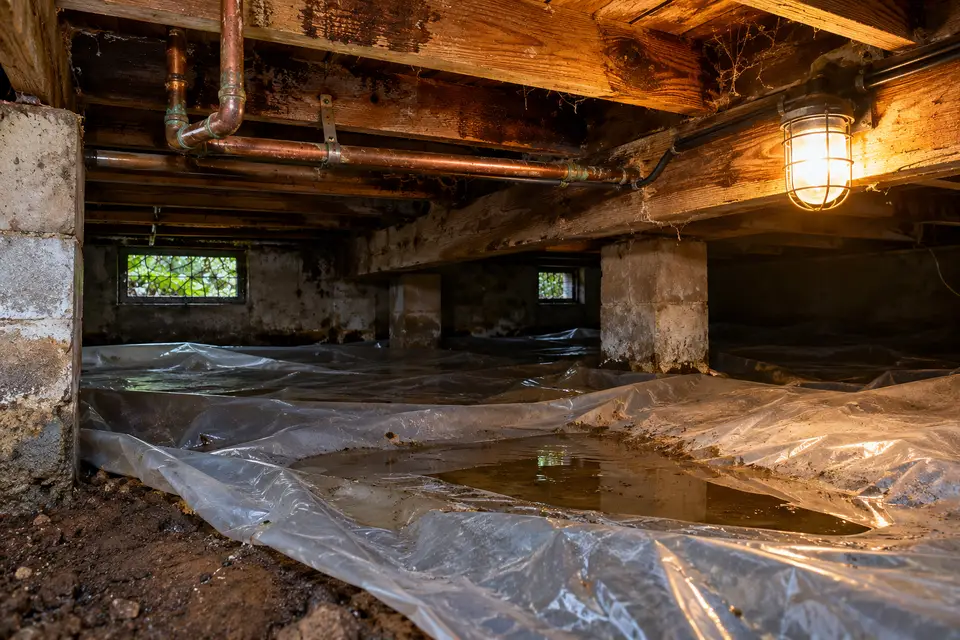
Concealed leaks tend to begin in just a few spots. In a house with a crawl space and a long damp season, these are the spots plumbers check first.
- Under the floor
- Supply pipes in the crawl space can drip for months onto a vapor barrier before anyone looks.
- Behind showers and tubs
- A failing valve or a loose joint inside the wall soaks the framing and shows up as a stain below.
- Toilet supply and wax seals
- A slow seep at the base of a toilet often appears as a soft floor or a stain on the ceiling under it.
- Water heater connections
- Fittings on top of the tank and the relief valve line can drip unnoticed in a closet or garage.
- Under slabs and in the yard
- A leak under a concrete floor or in the buried line outside shows up mainly on the meter.
Damp from a leak or damp from the weather?
In a climate with long rainy seasons, not every damp spot is a plumbing leak. Water can also come from the roof, the foundation or condensation. Comparing the signs saves time.
Likely a plumbing leak
- The meter moves with everything off
- The damp stays the same in dry weather
- It grows after showers, laundry or flushing
- It sits near a fixture or along a pipe route
Likely rain or condensation
- It appears only after heavy rain
- It sits near a window, roof line or foundation wall
- The meter stays still
- It dries out during a dry spell
If the meter stays still and the damp follows the weather, a plumbing leak is unlikely. Our crawl space guide covers water under the house in more detail.
After the leak is found
Once the source is pinned down, the plumber explains the repair. Depending on where the leak is, that can mean a new fitting, a short section of pipe or a burst pipe repair for a larger break.
If the leak has been running for a while, the plumber also points out any area that needs drying or checking for damage. Catching it early keeps that part small.
Checks you can make before the visit
These checks help the plumber start in the right place. None of them require tools.
- Do the meter test with everything off and note how fast the dial moves.
- Close each toilet supply valve one at a time and see if the meter stops.
- Feel floors near bathrooms and the water heater for warm or soft spots.
- Shine a flashlight into the crawl space opening and look for wet patches.
- Write down when stains appear, such as after showers or after rain.
Bring your notes to the visit. A few days of observations often save an hour of searching.
Leaks that hide in a damp house
When the air under the floor is already damp, a small drip can blend in for months.
A pipe seeping into a wet crawl space, or an attic full of condensation, rarely looks out of place. For this reason the meter and your water account are often the first clues, well before a puddle appears.
- Check the meter with everything off once a season.
- Peek beneath sinks and beside the water heater whenever you clean.
- Lift the crawl space hatch after a long dry spell, when fresh water stands out.
- Notice any new musty smell inside cupboards on outside walls.
Questions about leak detection in Oregon City
Before the visit
What gives away a leak I cannot see?
Turn everything off and watch the water meter for a few minutes. If the leak indicator moves, water is escaping somewhere. Our meter guide explains the test step by step.
Should I turn off the water while I wait?
If you can see damage spreading, yes. If the leak is slow and you need water, you can leave it on, but avoid long showers and laundry until the leak is found.
Finding it
Will the plumber need to open my walls?
Only once the leak is narrowed down to a small area, and only as much as needed to reach the pipe. The plumber explains where and why first.
Can a leak under a concrete floor be found?
Yes. The meter, warm spots on the floor and the layout of the pipes help locate a leak under a slab before any concrete is opened.
Why does a leak show up far from where it starts?
Water runs along pipes, framing and the underside of floors before it drips. The stain you see is often several feet from the actual leak.
After it is found
Is the repair done on the same visit?
Often, yes, if the leak is reachable and the parts are on hand. A larger repair may be planned for a second visit.
How can I tell the leak is fixed?
Repeat the meter test with everything off. If the indicator stays still, the leak has been stopped.
Does a leak always show up on the meter?
A leak on the supply side shows on the meter, because the water is under pressure and keeps flowing. A drain leak only leaks when water is running down it, so it may not show on the meter at all.
Can a leak make my floors feel warm?
Yes. A hot water pipe leaking under a floor can warm the spot above it. A warm patch on tile or concrete is a clue worth mentioning.
Does leak detection mean opening walls?
Most searches end with one small opening at most. The leak is narrowed to a single spot first, and you hear where any cut will go before it happens.
Can a leak be under a floor or slab?
It can, especially on a hot water line. Warm patches, cracked tiles or a meter that moves with every fixture closed are typical clues.
Should I keep using water while I wait for the visit?
Use it normally unless the leak is spreading. If water shows up somewhere new, close the main valve, or the meter valve if the house valve will not shut.