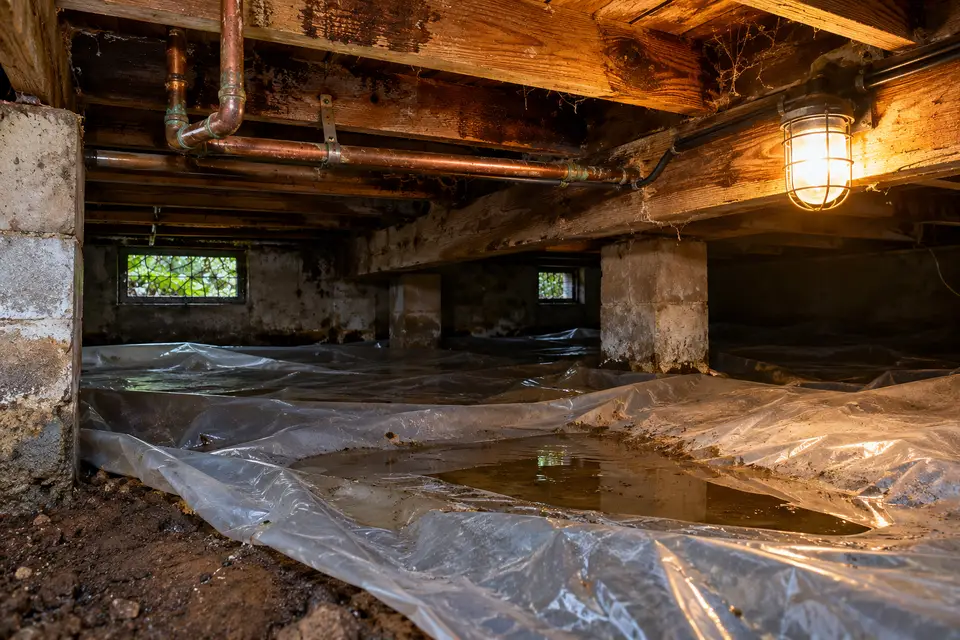
Water in the Crawl Space Under Your House
Work out where the water comes fromWater in the crawl space can come from rain, condensation or a leaking pipe, and each one points to a different fix.
Three sources of water in a crawl space
Finding water in the crawl space is common in a climate with long rainy seasons. The first job is working out where it comes from.
Rain and groundwater
Water seeps in through the foundation or the soil during long wet spells and pools at the lowest point.
Condensation
Damp air meets cold pipes or ducts and drips, leaving wet spots in lines under them.
A plumbing leak
A supply pipe, drain line, toilet seal or water heater connection leaks under the floor.
Each source needs a different fix. Rain needs drainage work, condensation needs better ventilation or insulation, and a plumbing leak needs a plumber.
Telling a pipe leak from rainwater
A few simple observations usually point to the answer.
Points to a pipe leak
- The water meter moves with everything off
- The wet spot stays in dry weather
- Water is directly under a bathroom, kitchen or the water heater
- You hear dripping or running water
Points to rain or groundwater
- Water appears after heavy rain
- It pools along the foundation walls
- It dries out in a dry spell
- The meter stays still
If the meter test shows a leak, our leak detection service can pin down where the pipe is leaking.
Looking into the crawl space safely
You can learn a lot from the access hatch without crawling inside.
- Use a bright flashlight and look from the hatch first.
- Do not go in if there is standing water near wiring or a furnace.
- Look for wet patches on the vapor barrier and drips from pipes overhead.
- Note whether the water sits under a bathroom or kitchen above.
- Take photos to show the plumber.
If you do go in, wear old clothes, gloves and eye protection, and tell someone you are under the house.
Plumbing leaks that show up under the floor
- Supply pipes
- A pinhole or loose fitting drips steadily, even with no fixture running. See burst pipe repair.
- Drain lines
- A drain leak drips only when water goes down that drain, such as after a shower or laundry load.
- Toilet seals
- A failing wax seal leaks a little with each flush, often onto the subfloor first. See toilet repair.
- Water heater connections
- Fittings and relief valve lines from a heater above can drip down into the crawl space.
- Outdoor faucet lines
- A pipe split in a cold snap may only leak once the faucet is turned on.
Why it matters in a damp climate
A crawl space that is already damp for months each year has little room for extra water from a leak.
Extra moisture from a plumbing leak speeds up wood rot, corrosion on pipes and mold on framing. It also adds to musty smells inside the house. Fixing the leak keeps the crawl space as dry as the climate allows.
What you can do while you wait
If you suspect a plumbing leak under the house, a few steps limit the damage until the plumber arrives.
- Run the meter testTurn everything off and watch the meter. Note how fast the dial moves.
- Close the right valveIf the leak is clearly under one fixture, close that fixture valve. Otherwise close the main. Our shutoff guide explains where.
- Stop using that drainIf the drip only appears when one drain is used, avoid it until the repair.
- Keep notesWrite down when the water appears and whether it changes with weather or water use.
When to call a plumber and when to call someone else
Call a plumber when the meter moves, when water sits under a fixture or when you can see or hear a pipe dripping.
If the water clearly comes from rain or groundwater, a drainage or foundation specialist is the right call. The plumber can confirm whether any of the water is from the plumbing first, so you are not fixing the wrong problem.
Signs above the floor that point below it
You often notice a crawl space leak from inside the house before you ever look under it.
A musty smell
A damp, earthy smell in a room or closet often rises from wet ground or framing below.
Soft or bouncy floors
Subfloor that stays wet softens over time, especially near bathrooms and the kitchen.
Cupping or lifting flooring
Wood and laminate floors swell and curl at the edges when moisture comes up from below.
A meter that keeps turning
A supply leak under the house shows on the meter even when nothing above shows water.
One of these alone is reason enough to peek below the floor, or have a plumber do it for you.
Keeping pipes under the house in good shape
A few simple habits help pipes in a crawl space last longer and leak less.
- Keep the vapor barrier in place and intact so ground moisture stays down.
- Make sure pipe insulation is in place where pipes run near vents or outside walls.
- Check that pipe hangers and straps still hold the pipes firmly.
- Look for green or white crust on copper fittings, a sign of a slow seep.
- Clear stored items away from pipes so they are easy to inspect.
If you would rather not go under the house yourself, ask the plumber to take a look during any visit. A quick inspection catches small problems early.
What the plumber checks under the house
When a plumber looks at a wet crawl space, they work through the possible sources in order.
- The meter and the supply linesA moving meter points to a supply leak, which the plumber traces along the pipe route.
- The drain linesRunning water down each drain shows whether a drain joint leaks only when used.
- Fixtures aboveToilets, tubs and the water heater above the wet area are checked for seal and fitting leaks.
- CondensationSweating pipes and ducts are noted, since they need insulation rather than repair.
What to bring when you look under the house
- A bright flashlight and a spare.
- Old clothes, gloves and knee pads.
- Your phone for photos of anything wet.
- Someone upstairs who knows you are under the floor.
Never crawl through standing water near wiring, a furnace or a water heater. If the water is deep or the air smells of gas or sewage, back out and call.
Crawl space water questions
Finding the cause
Is a little water under the house normal?
Some damp is common in a long rainy season. Standing water, water under fixtures or a moving meter are not normal and are worth checking.
Can condensation look like a leak?
Yes. Cold pipes and ducts sweat in damp air and drip in lines. Condensation usually changes with the weather, while a leak does not.
How can I tell if a drain line is leaking under the house?
Run water down one drain at a time while someone watches from the hatch. A drip that starts when one drain runs points to that line.
Afterwards
Will the plumber dry the crawl space?
The plumber fixes the leak. Large amounts of water may need a drying or moisture specialist, and the plumber can tell you if that seems needed.
How regularly is a crawl space worth checking?
Twice a year is a good habit, in late fall and early spring, plus after any leak or a hard freeze.
Can a crawl space leak cause mold in the house?
Long lasting damp under the floor can encourage mold on framing and raise humidity inside. Fixing the leak is the first step, and drying the area matters too.
Should the vapor barrier be wet on top?
No. A wet top surface means water is coming from above, such as a drip or condensation, or seeping in around the edges.
Is it worth insulating pipes in the crawl space?
It is, especially near vents and along outside walls. Insulation reduces condensation and protects pipes during a cold snap.
Can the plumber tell if a stain upstairs comes from under the house?
Stains upstairs usually come from pipes in the walls or ceiling above, not the crawl space. The plumber traces water from its highest point down.
How do I get into my crawl space?
Most homes have a hatch in a closet floor or a vent opening on the outside. If you cannot find it, the plumber can.
Why is there water under the house only in winter?
Long wet spells raise the groundwater and soak the soil around the foundation. Seasonal water that dries out in summer is usually rain, not plumbing.
Can a sump pump help with crawl space water?
A sump pump moves groundwater out of a low spot. It does not fix a plumbing leak, so confirm the source first with the meter test.
Should I be worried about animals in the crawl space?
Animals can damage pipe insulation and vapor barriers. If you see signs of them near pipes, mention it to the plumber so they can check for damage.
Will a plumber go into a wet crawl space?
Yes, once it is safe. If there is standing water near wiring, the power to that area may need to be switched off first. The plumber will tell you what they need before going in.
Is a little moisture on the vapor barrier normal?
Some condensation is common in a damp climate, especially in spring. Puddles on top of the barrier, or wet spots that track toward a pipe, are worth a closer look.
Can a crawl space leak damage the floors above?
Yes. Constant moisture can soften the subfloor, cup wood flooring and loosen tile. Fixing the leak and drying the space early protects the floors.
Who deals with groundwater under the house?
Water coming from the soil or from gutters is a drainage matter rather than a plumbing one. The plumber can tell you which it is and repair any pipe that is part of the problem.