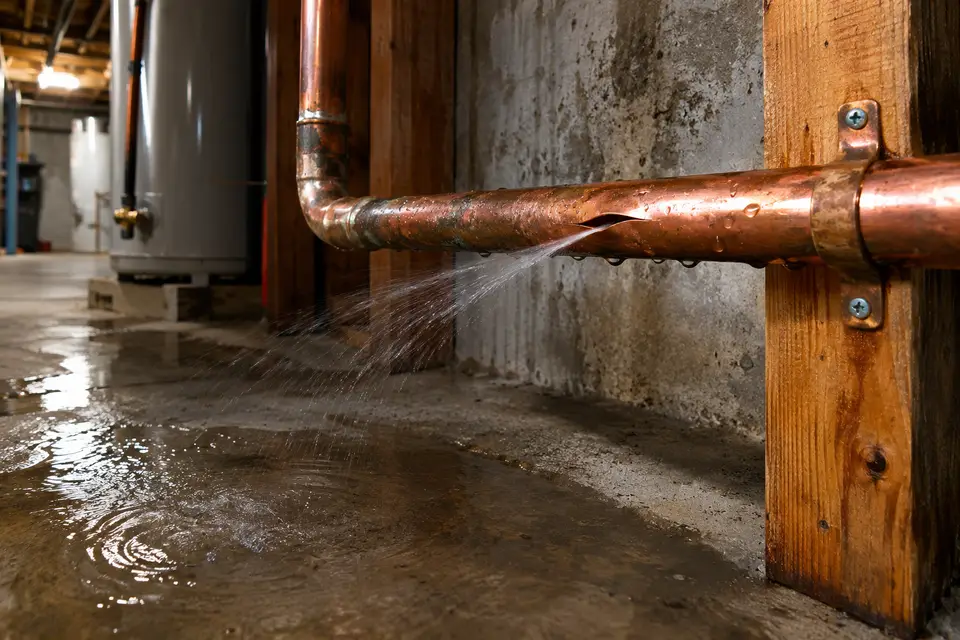
Burst Pipe Repair in Oregon City, OR
Stop the water in the next minuteWater spraying, dripping through a ceiling or soaking a wall? Close the main valve, then a licensed plumber can come out to repair the pipe.
Shut off the flow first
Burst pipe repair in Oregon City starts with you, in the first minute. These steps limit the damage while the plumber is on the way.
- Close the main shutoff valveWind a round handle to the right until it will go no further, or swing a lever handle ninety degrees until it lies across the pipe. Hunting for the valve? The shutoff guide lists the usual hiding places.
- Keep away from wet outletsWhen water has reached sockets, cords or a ceiling light, kill that circuit at the breaker panel, but only from dry ground.
- Open a tap at the lowest pointRunning the laundry tub tap or a garden faucet empties whatever is left in the lines, so the leak dwindles and stops.
- Move what you can and take photosGet rugs, cardboard boxes and anything electrical up off the floor, and photograph the mess before tidying.
Once the water is off, call us. Tell us where the pipe is, what it is made of if you know, and whether the ceiling or a wall is wet.
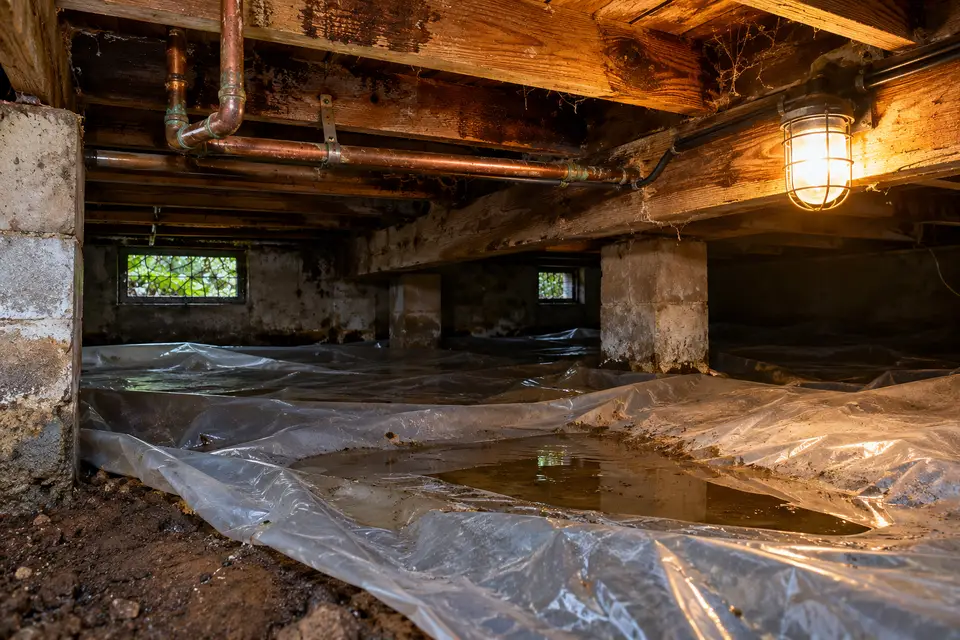
Where pipes split in Oregon City homes
A burst pipe is rarely random. It usually fails where the pipe is weakest or where conditions are hardest on it. In a wet climate with long damp seasons, these are the places plumbers see most.
- Crawl spaces. Pipes under the floor sit in damp air for months, which wears on fittings and older metal pipe.
- Outside walls and garages. A rare hard freeze hits these pipes first, and the split often shows only after the thaw.
- Behind the washer and under sinks. Supply hoses and old connectors age quietly until one gives way.
- Near the water heater. Fittings at the top of the tank carry heat and pressure every day.
Why a pipe gives way
Knowing the cause helps the plumber choose the right repair and helps you avoid a second break. These are the usual reasons a pipe splits or cracks.
- Freezing
- Water expands as it freezes and pushes on the pipe from inside. The crack opens, then leaks when the ice melts.
- Corrosion
- Older galvanized steel rusts from the inside, and copper can pinhole where water chemistry or flow wears it thin.
- High water pressure
- Pressure that runs too high strains every joint in the house. A failing pressure regulator is a common cause.
- Movement and age
- Pipes that rub against framing, loose straps and old fittings wear through over years of small movements.
- Damage
- A nail through drywall, a shifted foundation or a heavy object can crack a pipe without anyone noticing at first.
How the plumber repairs a burst pipe
Every burst pipe repair in Oregon City depends on the pipe material, where the break is and how much of the pipe is worn. The plumber explains the choice before any work starts.
A section repair
For a single split in otherwise sound pipe, the plumber cuts out the damaged piece and joins in a new section.
A new fitting
When the leak is at a joint, elbow or valve, replacing the fitting usually fixes it for good.
A longer run of pipe
When the pipe is corroded along its length, the plumber may suggest replacing a longer run so the next weak spot does not fail next month.
After the repair, the plumber turns the water back on slowly, watches the joints under pressure and checks nearby pipes for other weak spots. If the walls or floor got soaked, you will also hear what needs drying.
Where the pipe runs through a crawl space or an outside wall, the plumber may also suggest insulation or a better route for the new section, so the same spot is not exposed in the next cold snap.
Pipe materials and how each one breaks
What the pipe is made of steers the whole repair. Glance at its color and surface if it is in view, and pass that on, since it tells the plumber plenty ahead of time.
| Pipe material | How it usually fails | What the repair often looks like |
|---|---|---|
| Copper, a reddish brown metal | Pinholes from corrosion, splits in a freeze, leaks at soldered joints | A new section or fitting joined into the run |
| Galvanized steel, a dull gray metal | Rust from the inside that narrows and then perforates the pipe | Often a longer run replaced, since nearby pipe is usually worn too |
| PEX, a flexible plastic tube in red, blue or white | Damage at fittings, cuts, or a crack where it froze solid | A new piece of tubing joined with fresh fittings |
| CPVC, a rigid cream colored plastic | Brittle cracks in older runs, splits at glued joints | The cracked part cut out and a new section joined in |
If you are not sure what you have, that is fine. The plumber identifies it on site and explains why the chosen repair suits that material.
Warning signs before a pipe fails
Many pipes give a little warning before they split. Catching these signs early turns an emergency into a planned repair.
- Rust colored water when a tap first opens, which can point to corroding steel pipe.
- Green or white crust on copper fittings, a sign of a slow seep that has been drying out.
- Banging pipes when a valve closes quickly, which strains joints over time.
- Pressure that seems too strong at every tap, often from a failing pressure regulator.
- Small bulges or dents in exposed pipe in the garage or crawl space.
- A drip that comes and goes with no fixture running nearby.
If you notice any of these, call and describe them. A plumber can check the pipe and the pressure before a small problem becomes a flooded room.
Drying out after a burst pipe
A mended pipe stops fresh water, yet whatever already soaked into walls, flooring and insulation has to dry, which drags on in a climate this damp.
- Prop open nearby cupboards and closet doors to let air circulate.
- Set any fans and a dehumidifier going, and leave the heating running.
- Pull up soaked rugs and pads and move them somewhere they can dry or be replaced.
- Sniff for mustiness during the following week, a sign moisture may still be hiding.
If a lot of water spread into walls, ceilings or under flooring, a drying company may be needed for that part. The plumber can tell you how far the water seems to have gone.
Burst pipe repair or a slow leak?
Not every wet spot is a burst pipe. A slow leak can soak a cabinet or stain a ceiling without any spraying water. Both need repair, but the urgency is different.
Treat it as a burst pipe
- You can hear or see water moving
- A ceiling is sagging or dripping
- Water is spreading across a floor
- Pressure dropped suddenly at every tap
Treat it as a slow leak
- A stain that grows over days
- A damp cabinet floor
- A meter moving while every tap is shut
- A musty smell with no visible water
Cannot locate a slow leak at all? The leak detection page shows the method a plumber uses to find it.
Either way, close the nearest valve if you can find one and keep an eye on the spot. A slow leak rarely fixes itself, and it can do as much damage as a burst pipe if it runs for weeks.
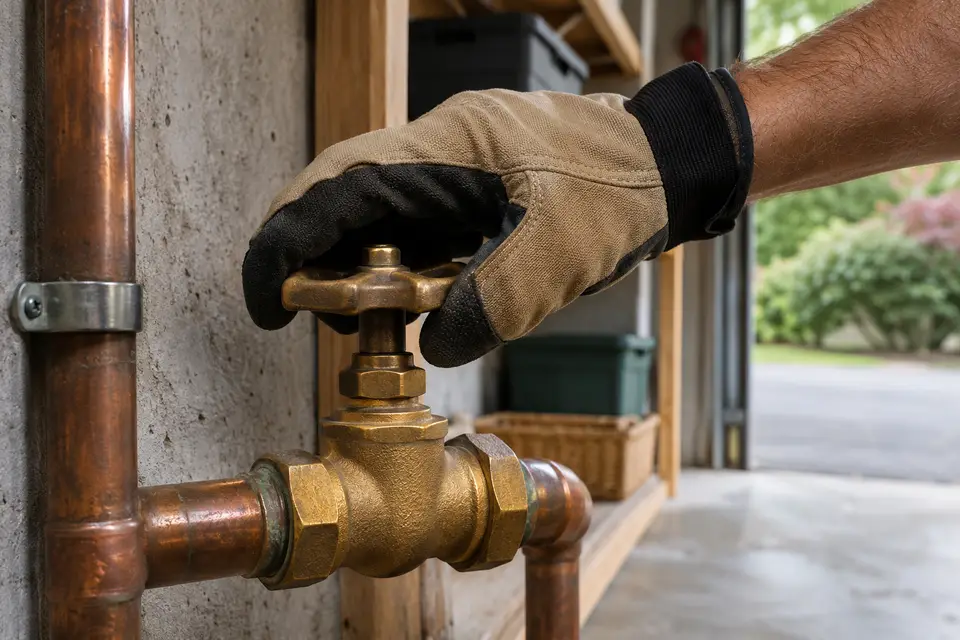
Protecting your pipes after the repair
A few habits make a second break much less likely, especially in a house with a crawl space or pipes along outside walls.
- Know where the main shutoff is and test that it turns, once or twice a year.
- Before a forecast freeze, cover outdoor faucets and keep cabinet doors open on outside walls.
- Leave the heating on during winter trips, turned down if you like.
- Replace rubber washer hoses with braided ones and check them when you clean behind the machine.
- Ask the plumber to check the water pressure while they are there.
If your house has old galvanized pipe, it is worth asking about its overall condition. Replacing a short section fixes today, but heavily rusted pipe tends to fail again a few feet away.
Details that speed up a burst pipe visit
A few facts shared on the phone let the plumber pack the right fittings and plan the work before reaching your door.
- Where the water appeared
- Name the room and whether the water came from a wall, a ceiling, the floor or a cabinet. Each points to a different stretch of pipe.
- What the pipe looks like
- Copper looks orange or brown, plastic lines are white, cream or colored, and old galvanized pipe is dull gray. A photo settles it quickly.
- Whether the main is closed
- Say if the house valve stopped the water fully or if you had to use the meter valve by the street.
- Anything near the leak
- Mention wiring, a light, flooring or stored belongings close to the break so the plumber knows what to protect.
If the leak is inside a finished wall, mark the wettest spot with a strip of tape. This small step helps the plumber open the smallest possible section of drywall.
Questions about burst pipe repair in Oregon City
Right after the break
Should I turn off the water heater too?
If the supply stays shut for long, put a gas tank on its pilot or vacation setting and flip the breaker for an electric one. A tank that cannot refill should not keep heating.
Can I use the toilets with the water off?
Each toilet flushes once with the water in its tank. After that it will not refill until the water is back on.
Is a burst pipe always an emergency?
If water is moving and you cannot stop it at the main, yes. If the main is closed and the water has stopped, you have time to call and plan the repair calmly.
The repair itself
Does the drywall have to come open?
Sometimes. If the break is inside a wall, the plumber needs access to repair it. They will open only as much as needed and explain why first.
Can a frozen pipe split without leaking right away?
Yes. Ice can hold a crack closed until it melts. That is why a leak often appears hours after a cold night ends.
Should old pipe be replaced while the wall is open?
It can make sense when the pipe nearby is corroded. The plumber will show you its condition so you can decide.
Pipes in this climate
Do pipes really freeze in Oregon City?
Deep freezes are unusual in this area, though a cold spell does arrive now and then. Lines in exterior walls, garages and under the floor take the brunt when it does.
Does a damp crawl space hurt pipes?
It does over many years. Constant damp speeds up corrosion on metal pipe and fittings and can hide a slow leak until the damage is large.
Which pipe material is most likely to burst?
Old galvanized steel and thin copper that has corroded are the usual suspects. Plastic pipe resists corrosion but can crack in a freeze or where a fitting was stressed.
Afterwards
Can I turn the water back on myself after the repair?
The plumber will do it with you, slowly, while watching the repair. Opening the main too fast can send a surge of air and sediment through the pipes.
Why is the water cloudy or sputtering after the repair?
Air sneaks into the lines while they are open, so faucets spit and the water looks milky for a little while. Let every tap run briefly and it settles.
Should I check the rest of the house?
Worth doing the following morning. The jolt of a break can unsettle a weak joint in another spot, so peek beneath each sink and around the tank.
Will my insurance want photos?
Insurers usually ask for photos of the damage and the broken pipe. Take them before cleanup and keep the old piece if the plumber removes it.
How do I know the repair holds?
The plumber tests the repair under full pressure before leaving. Check the spot again the next morning and call us if you see any moisture.
Can a burst pipe be repaired without replacing the whole line?
In most cases it can. The plumber cuts out the damaged length and joins in new pipe, then checks the rest of the run for weak spots before closing up.
Should I move furniture away from a wet ceiling?
Yes. A ceiling that sags or bulges can hold a lot of water. Move furniture and rugs out from under it and keep people out of the room until the plumber has looked.
Can I tape a split pipe until the plumber arrives?
Repair tape or a clamp can slow a small split once the water is off, but it is only a stopgap. Keep the main closed until a proper repair is made.